The 2022 Ghana Demographic and Health Survey (2022 GDHS) was implemented by the Ghana Statistical Service (GSS). The funding for the GDHS was provided by the Government of Ghana, the United States Agency for International Development (USAID), the U.S. President’s Malaria Initiative (PMI), UNFPA, UNICEF, the World Bank, the Global Fund, and the Korean International Cooperation Agency (KOICA), World Health Organisation (WHO) and Foreign, Commonwealth and Development Office (UK-FCDO). ICF provided technical assistance through The DHS Program, a USAID-funded project providing support and technical assistance in the implementation of population and health surveys in countries worldwide.
Additional information about the 2022 GDHS may be obtained from the Ghana Statistical Service, Head Office, P.O. Box GP 1098, Accra, Ghana; fax: +233-302-664304; email: info@statsghana.gov.gh.
Information about The DHS Program may be obtained from ICF, 530 Gaither Road, Suite 500, Rockville, MD 20850, USA; telephone: +1-301-407-6500; fax: +1-301-407-6501; email: info@DHSprogram.com; internet: www.DHSprogram.com.
Recommended citation:
Ghana Statistical Service (GSS) and ICF. 2023. Ghana Demographic and Health Survey 2022: Summary Report. Accra, Ghana, and Rockville, Maryland, USA: GSS and ICF.
The contents of this report are the sole responsibility of the GSS and ICF and do not necessarily reflect the views of USAID, the United States Government, or other donor agencies.
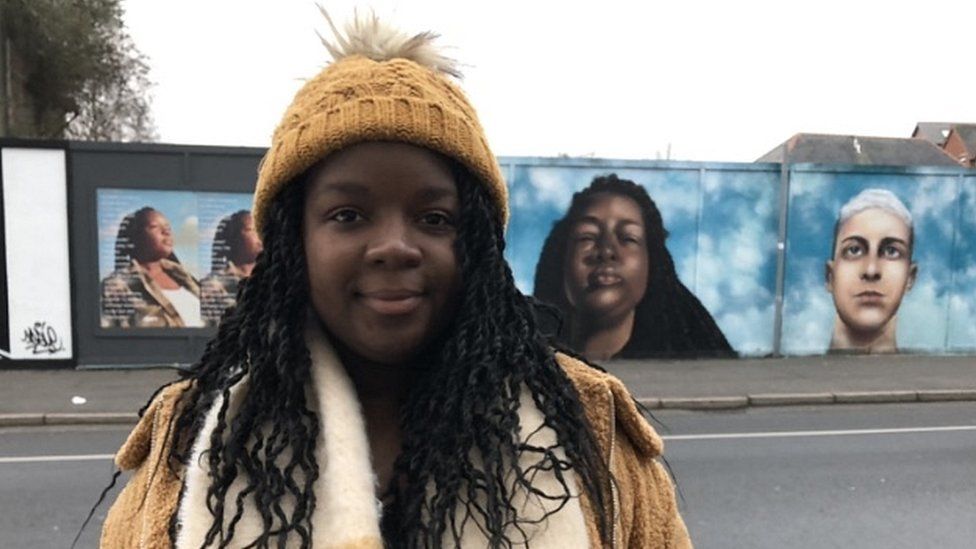
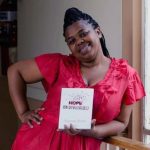
For Mercy Shibemba, growing up with HIV in Cardiff was something she thought would have to be kept a secret.
Part of the difficulty was being unable to access specialised support services for her voice to be heard.
But a new HIV advocacy network, Wales HIV Advocacy Matters (WHAM) now aims to change that by increasing community understanding and improving access to testing and treatment.
The project is set to run for the next two years.
It has been set up by volunteers, including some sexual health and HIV specialists in the Cardiff and Vale health board area, in the hope it will benefit people across Wales.
Medical progress has made HIV a manageable and undetectable virus and Mercy, 23, who was born with HIV, is able to live a “happy and healthy life”.
She has travelled the world to talk about her experience of living with HIV and advocates for improvements in testing, treatment and support.
“Growing up in Cardiff and talking about HIV was not two things that went together for me,” she said.
Thanks to antiviral drugs, people can live a “healthy and happy life” with HIV
“When I first found out and was grappling with it, it was a massive thing because nobody was talking about it. It felt like these two worlds could not mix and I always second guessing how I was going to live life with this big secret I had to keep.
“Wales hasn’t had specialised support services for people living with HIV. If you look across the border in England they have lots of different services people can access. Part of what was difficult growing up here was there wasn’t that tailored support until the Children’s HIV Association was able to do some work in Wales.
“I think having an advocacy network which could bring some really influential people together across Wales so that there’s a cohesive strategy going forward.”
Data on the number of people diagnosed with HIV in Wales has not been published since April 2019.
At the time there had been slight increases in positive cases among women and young people. The number of men testing positive had reduced but it’s believed men who have sex with other men are still believed to be the most at risk.
Cardiff and Vale health board is a member of the Fast Track Cities programme which is a global initiative to reduce stigma and improve health outcomes for people living with HIV.
A volunteer development worker with the programme, Lisa Power, has worked with others to secure funding for the WHAM advocacy network.
Ms Power said: “One of the problems we have in Wales which is significantly worse here than elsewhere in the UK is a lot of people are diagnosed very late.
“We want to use this service to make sure people are diagnosed early enough to benefit from the excellent treatment that’s available now.”
“People who want to do something about HIV because maybe it affects them personally, but they don’t have anywhere to go in Wales. There are no HIV charities in Wales, there are no activism in the community so what we want to do is set up a network so people can support each other in creating good change.
“Some communities are affected more than others. Gay men are much more affected than most, we have a number of cases in Wales among migrants and amongst women.
“We’re about getting people together and to become lobbyists and making sure services in their area are as good as they can be.”
In a statement, the Welsh government said: “We are working with stakeholders to develop a HIV Action Plan for Wales which will contain focused, measurable actions to increase HIV prevention, diagnosis, treatment and care and reduce stigma. Improving access to services, education and awareness will form part of the action plan.”
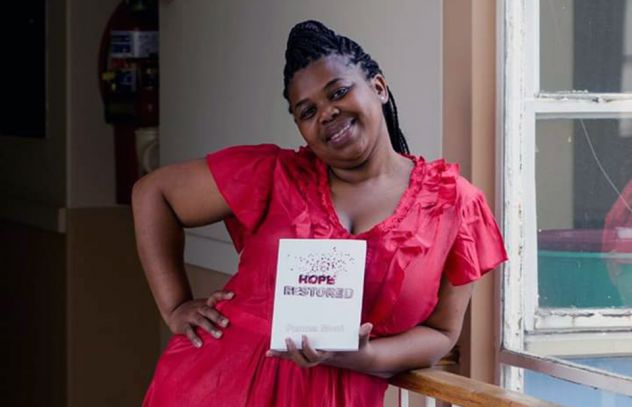
Pumza Mooi is worried. A resident of Port Elizabeth, South Africa, she is one of 2.5 million people in the country living with HIV but not currently on antiretroviral therapy.
“I’ve decided that I have to start,” said Ms Mooi. “No matter how strong my CD4 count or how low my viral load, it will never be as good as on HIV treatment. It is something I must do for myself, for my children and for those who look up to me. I am scared of getting sick,” she said.
Ms Mooi’s decision to start HIV treatment comes at a time of uncertainty for people with a compromised immune system, owing to the risk of a severe COVID-19 infection. There is currently no evidence that people living with HIV have any greater risk of acquiring COVID-19, but there is concern that a COVID-19 infection could be more severe for people living with HIV who are not taking antiretroviral therapy.
South Africa is under a 21-day lockdown to try to slow the spread of COVID-19 and Minister of Health Zweli Mkhize has urged everyone to take precautions to prevent infection, emphasizing the importance of everyone knowing their HIV status, getting tested and immediately starting treatment should they test positive.
“The thought of catching COVID-19 frightens me,” said Ms Mooi. “It is scary to think that I already have one virus [HIV] that my body is dealing with. I am asking myself, is my body strong enough, is my immune system strong enough?”
Ms Mooi acquired HIV many years ago, when the prevailing advice was to commence treatment if the patient experienced a reduction in their CD4 count, thus falling ill. She has been monitoring her status ever since. In 2016, the World Health Organization published new guidelines recommending lifelong antiretroviral therapy for all children, adolescents and adults, including all pregnant and breastfeeding women living with HIV, regardless of their CD4 cell count. In other words, anybody diagnosed with HIV should start treatment straight away.
UNAIDS is actively monitoring the impact of COVID-19 and working with networks of people living with HIV, the government and development partners to ensure that the concerns of people living with HIV are heard and reflected in the COVID-19 response. This includes identifying constraints on health services, encouraging longer, multimonth prescriptions of antiretroviral medicine and helping communities to provide solutions.
Social networking
Life under lockdown is especially difficult for people living in informal settlements and UNAIDS has recognized the challenge of achieving self-protection, social distancing and containment in such areas. Added to this are fear-inducing and inaccurate reports about the coronavirus. “There is a lot of information going around but not all of it is true,” Ms Mooi said. “I am reminding people that the government has given us a WhatsApp number where we can get good information, and not to worry about other information. If it is true, the government will tell us.”
Luckily, Ms Mooi has a robust support network after she shared her HIV status online many years ago. “I know I will be looked after,” she says. She moderates Facebook and WhatsApp support groups for people living with HIV that have dozens of members, ranging in age from a 16-year-old born with HIV to a woman of 62 who has lived with HIV for many years.
Over the past few years, many in the group have shared their experiences of living with HIV and their experiences of taking HIV treatment, confronting stigma and discrimination and staying motivated. Their consensus is that taking and adhering to HIV treatment is the best option, Ms Mooi said.
Right now, there is a new topic in the groups. “They are worried about COVID-19,” Ms Mooi said. “I tell them don’t worry, stay home and practice good hygiene.” For the time-being, everyone knows they will have to sit tight and take care of each other remotely, to get through extended isolation.
The group fosters discussion mostly among women, although men are listening in. “I get messages from men asking why we don’t discuss issues affecting them, but if they don’t disclose they won’t always get the help they need,” she says. “I encourage men to share their stories and let us help each other.”
Looking ahead
Like most, Ms Mooi is already looking forward to being able to move about more freely again and to start HIV treatment. She is doing what she can to look after her family and to encourage her networks of people living with HIV. “We are doing the things we are told to do, like washing our hands and keeping away from other people, and just praying and hoping for the best,” she said.